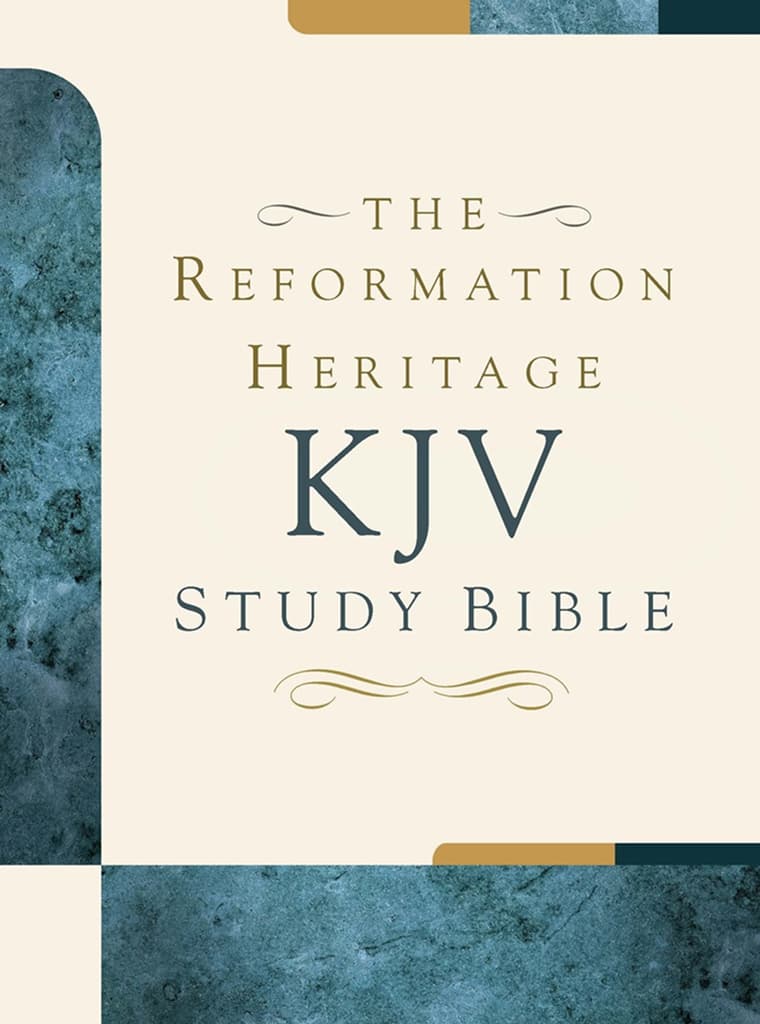
John 11 - The Reformation Heritage KJV Study Bible
Chapter 11: Christ raises Lazarus, the Jews plot to kill Jesus, and Christ leaves for a region near the wilderness.
The Raising of Lazarus (11:1–57)
11:2 anointed . . . wiped. See 12:1–6.
11:4 for the glory of God. Raising Lazarus would prove to be Christ’s greatest and final sign in this gospel (2:11), revealing Him as the Life before He died and rose again (v. 25).
11:6 two days. Jesus deliberately waited until Lazarus was dead.
11:8 thither. There.
11:9 walk in the day . . . stumbleth not. The safe way to live is always to do as God says.
11:10 no light in him. Those who do not trust in Christ are in total spiritual darkness.
11:11 sleepeth . . . awake him. An expression for dying and being raised from the dead (vv. 13–14; Eph. 5:14).
11:15 I am glad. Suffering and death are worthwhile if they result in faith in Christ.
11:16 Didymus. Means “twin.”
11:18 nigh. Near. fifteen furlongs. About two miles.
11:24 I know that he shall rise again. Martha knew the doctrine of the resurrection from the Old Testament (Job 19:25–26; Isa. 25:7–8; 26:19; Dan. 12:2–3; Hos. 13:14).
11:25 I am the resurrection, and the life. Another one of Jesus’ major “I am” claims to be God and Savior (6:35; 8:12,58; 10:7,11; 14:6; 15:1). Jesus not only shows the way to life (6:68) and gives life (4:10), but He is the life (1:4; 5:26; 14:6), that is, He is the glorious, immortal, eternal life of the coming age, already breaking into our world for the blessing of those united to Him (2 Tim. 1:10; 1 John 1:2). Christ’s words constitute the hope of all His believing people. The last day will show how true His claim is.
11:26 never die. A believer will not experience death as the curse of the law against sin (1 Cor. 15:55–57) but will triumph as one alive to God even in physical death (8:51–52).
11:32 fell down. A sign of great honor and devotion.
11:33–35 groaned in the spirit, and was troubled . . . Jesus wept. Our Lord was indignant that sin had brought such sorrow into this world and shed tears of love and compassion. Though having infinite knowledge in His deity, in His humanity His knowledge was limited (Where have ye laid him). His humanness is a great comfort to His people, for He is touched by our troubles, remembers His own experiences, and is able to help us as a sympathetic High Priest (Heb. 4:15).
11:38 stone lay upon it. Usually a large slab of stone used to protect the dead body from animals entering the cave.
11:39 stinketh. Lazarus’s body had already begun decomposing.
11:40 see the glory of God. The miracle will display God’s power in Christ to save sinners from the misery of the fall, represented in that great enemy, death (Gen. 2:17).
11:42 thou hearest me always. Christ’s intercession always obtains grace from God because the Son is perfectly pleasing to the Father (8:29).
11:43 he cried with a loud voice, Lazarus, come forth. A foreshadowing of the judgment day (5:28–29; 1 Thess. 4:16). Though the dead man had no ability to hear or obey, Christ’s command contained the power to produce life and obedience and so provides a picture of conversion by grace alone (5:25; Eph. 2:1,5).
11:44 napkin. One of the burial garments covering Lazarus.
11:47–48 council. The Sanhedrin, the ruling body of Judaea. Romans shall come. Perhaps they thought Jesus was about to lead a popular uprising (12:19).
11:50–52 expedient. Better. one man should die for the people. The ambiguous prophecy of the high priest was meant by him to commend Christ’s murder, but it unwittingly served to declare God’s purpose that Christ should die as a substitute for His people. This displays God’s sovereignty in accomplishing His loving plan of salvation through, not in spite of, the malice of men. children of God. Those who would come to trust in Christ and be adopted by God (1:12), even though many of them had not yet heard the gospel (10:16). Christ died for a particular people, God’s elect scattered among the nations, and they will be saved (10:14–15,26–28). abroad. Over a wide area.
11:53–54 from that day forth they took counsel. The time of our Lord’s death was drawing near (vv. 56–57).
11:55 the Jews’ passover. Our Lord’s death had to be at the time of the Passover, for He is the true Passover Lamb (1:29; 1 Cor. 5:7).
Thoughts for Personal/Family Worship: Chapter 11
- Since Christ’s death is the death of death to all His people, they need not sorrow excessively when facing death. In the great day the voice of Jesus will raise up all believers in glory. Though believers die physically, they never die spiritually or eternally but will rise at last to meet the Lord in the air at His second coming (1 Thess. 4:13–16). How do these truths affect the way in which you will face death?
- Though Christ is the infinite and living God, He is also a man with a human mind and emotions like our own. Therefore, we need not fear to approach Him but can pour out our hearts to Him and know He will sympathize with all except those who are rebellious against God. Here is a Priest who can help us in temptation. Consider that “Jesus wept” (v. 35). How does that encourage you to seek Him as the sympathizing High Priest (Heb. 4:15)?
About this Study Bible